As a kid from the Northeast, I don’t think I was prepared for the unfathomable beauty the state of Montana has revealed to me. As a student studying wildlife biology at the University of New Hampshire, I was more than pumped to get out to the West. I’m used to the typical rocky East Coast mountains, whitetailed deer, and being surrounded by greenery. My thoughts carried me away. I imagined that I’d see a few mountains that were a bit different from back home, view some new wildlife, and maybe talk to some cowfolk.

When I touched down in Montana I had a feeling this was going to be a good trip. The mountains surrounding the Missoula valley are massive; we don’t have features comparable to this back home. The topography was so different from my usual; a little less green, but the overlapping hills were beautiful. The birds were different, too. I couldn’t make it to the WRFI office without first identifying some new Rocky Mountain birds: the black tern, Vaux’s swift, hooded merganser, and Eurasian collard dove. Birding is a hobby of mine; back home I enjoy finding a variety of birds like the piping plover, scarlet tanager, and fish crow.
It wasn’t too long after I adjusted to Missoula’s altitude, the crew was off to the Bob Marshall Wilderness. I’m not sure my vocabulary can do the wilderness area that surrounds the Scapegoat Mountain justice. I can’t think of any words short of serene and breathtaking. The mountains are massive, streams crystal clear, and the trees are lush. Our first camp, Double Falls, provided us with a gushing, ice cold waterfall.
I have done some semi-hard things in life: playing rugby for my university, joining the National Guard, and banding a few very angry loons. Nothing has quite challenged my body and mind synchronicity as gaining 3000 ft elevation in one day, toting 45-50lbs of materials on my back with strangers I met the day before. Y’know what? I loved every minute of it, and so did the entire crew.
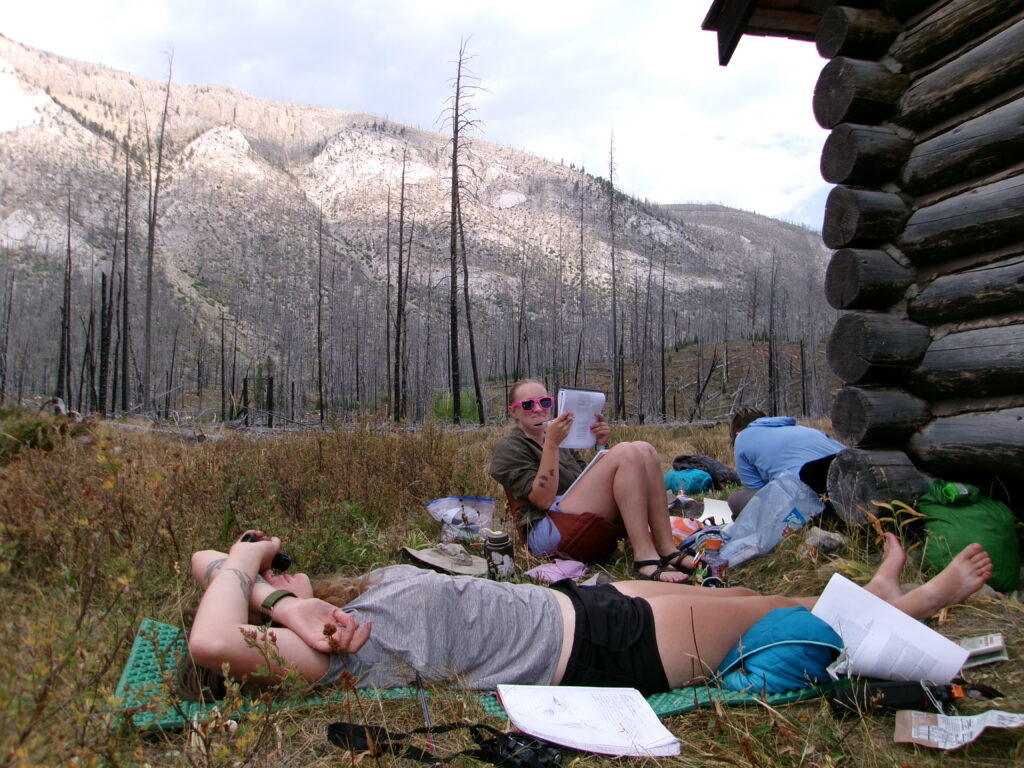
We saw things the average naturalist will never see in their life. We woke up to mule deer with bellies the size of cows practically licking the dew off our tents, unfragmented wilderness, pack trains toting mules and horses, and the very familiar call of the Clark’s nutcracker. After waking up in this incredible beauty, we’d have CLASS! Class in the clouds, burns, grassy hills, ranger stations, and mountains! By the end of the first section I had identified over 25 new birds, adding them to my life list. Some of my favorite birds I saw were the Stellar’s jay, American dipper, Canada jay, and greater yellowlegs. I’m excited to move onto our next section, where we will canoe 10 days on the Missouri River. Let’s see how many new lifer species I can get!