The first day of our float on the Bighorn River was cold and rainy. Many of us expected a slow, dreary day, and hoped for some sun. Still, we felt excited and soon after we set off we encountered fast moving water and many rapids. The frequency and speed of the rapids were unexpected and since I was the navigator that day, I felt very pressured to make the right decisions and to do well by my group. By the end of the first day some of our raincoats were soaked through, and many of us were cold and wishing for a fire. But even so, we came out of that first day with gratitude for those rapids and even more excitement for the upcoming days. Under gray skies in a soggy landscape I looked around and saw many smiles. The air filled with enough joyous laughter to replace the warmth of the sun.
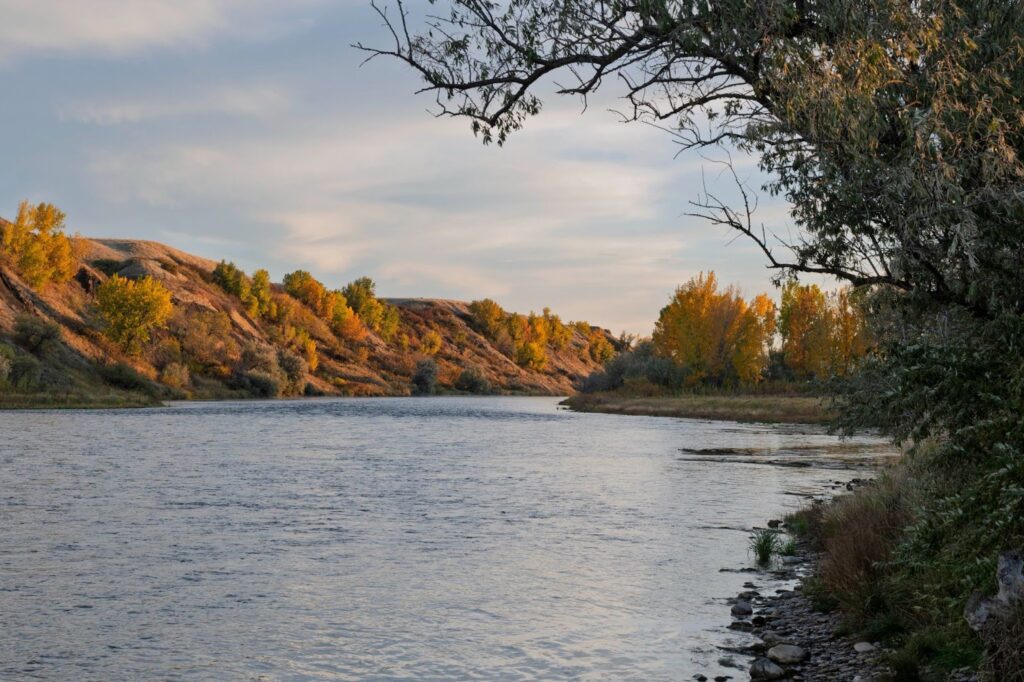
We started on the Bighorn River at the Yellowtail Dam. The water was cold and prime for trout fishers. The banks were full of cottonwoods and Russian olive trees. The trees, grasses, and rocky hills shone with bright autumn colors and, in my opinion, perfect Halloween vibes. The amount of cattle and mud was small compared to the Missouri River but they were still present. We camped at fishing access sites, which meant front country amenities like tables and toilets and, unfortunately, also lots of trash and road noise. Our trip led us from the Yellowtail Dam, over a diversion dam, and eventually to General Custer where we took out, with an additional day trip on the Yellowstone.
On the Bighorn, I felt like I developed a much stronger connection to the river because of the unexpectedness of it. The Bighorn moved a lot faster than the Missouri and had more rapids. It drew my attention to the water itself rather than just the banks on either side. On the Missouri, we decided which path of the river to take based on which was faster. On the Bighorn, we made the decision based on safety and fun. As long as both sides were safe, both options could be right. We were less focused on the faster path and more on the adventure itself. But the river soon taught me that there didn’t have to be strictly right or wrong decisions, that mile markers didn’t need to be exact, and that what mattered was simply allowing the river to show us its personality. Sometimes we chose the smaller path just because it looked like it might have good bird-watching opportunities.
Additionally, we learned to respect the river for its hazards. We had to watch out for strainers and swift currents that would slingshot us around a bend. We even went over a small broken diversion dam accompanied by a beaver dam on the Yellowstone River. All of these moments on the river(s) helped me form a connection with the water, full of respect, and love. The river forced us to pay attention to it and allowed us to have fun exploring its rapids, shallows, and currents. On the Missouri, I formed a connection with the wildlife and the landscape on the banks of the river. I formed a connection with ecology and geology. But on the Bighorn, I formed a connection with the river itself.
Throughout this course, I’ve learned just how important these types of connections are. Developing connections to all parts of the environment, the plants and animals on the banks, the geology, the ecology, and the river itself. It’s all part of our world. It all interacts and affects each other. It’s all part of our planet’s system. One thing that many people tend to forget is that we are also part of that system. Separating ourselves often makes it all too easy to cause damage unknowingly or without care. Developing relationships with the natural world is an important step to bringing humans back into that natural world and spreading a sense of respect, love, and care.
