Erik Kalsta’s ranch was unlike any other place I’d seen in Montana. The dirty and light brown sand and short stubby shrubs decorating the property’s ground resembled a desert in Utah or Arizona, not the “Big Sky State.” The fact that there were rattlesnakes living among the ranch’s hills did little to ease my nerves, especially because these were the hills I’d be working in for the next two or so hours building rock dams.
Kalsta builds these rock structures in the hills of his property to hold back water, letting it flow down slower to help retain moisture. When Kalsta spoke to me and my fellow WRFI students, he explained that the land historically received seven inches of moisture, but for the past four years only four inches of moisture had been collected. In an interview with a newspaper, Kalsta explained that he hoped that by slowing the flow of water with rock dams, he could “initiate a soil-building scheme that will increase plain productivity by 400 to 500 percent.” So I headed up to the hills, gloves and plenty of water on hand to help get plain productivity up.
It was a hot June day, much hotter than the mountain temperatures of Mt. Haggin and the Snowcrests I’d become used to. As I climbed up the hills covered with sage, Prickly Pear, and various grasses, I wasn’t exactly dreading the task of building dozens of rock dams, but was definitely not overly enthused with the idea of completing this task in the hot sun, especially with rattlesnakes lurking about.
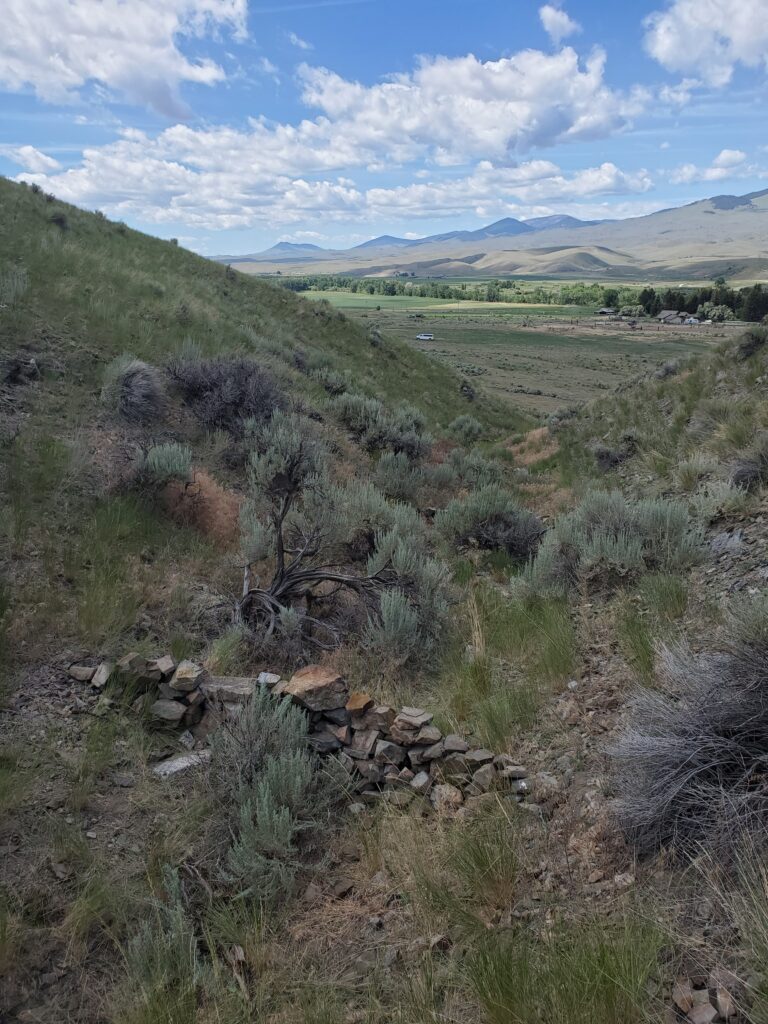
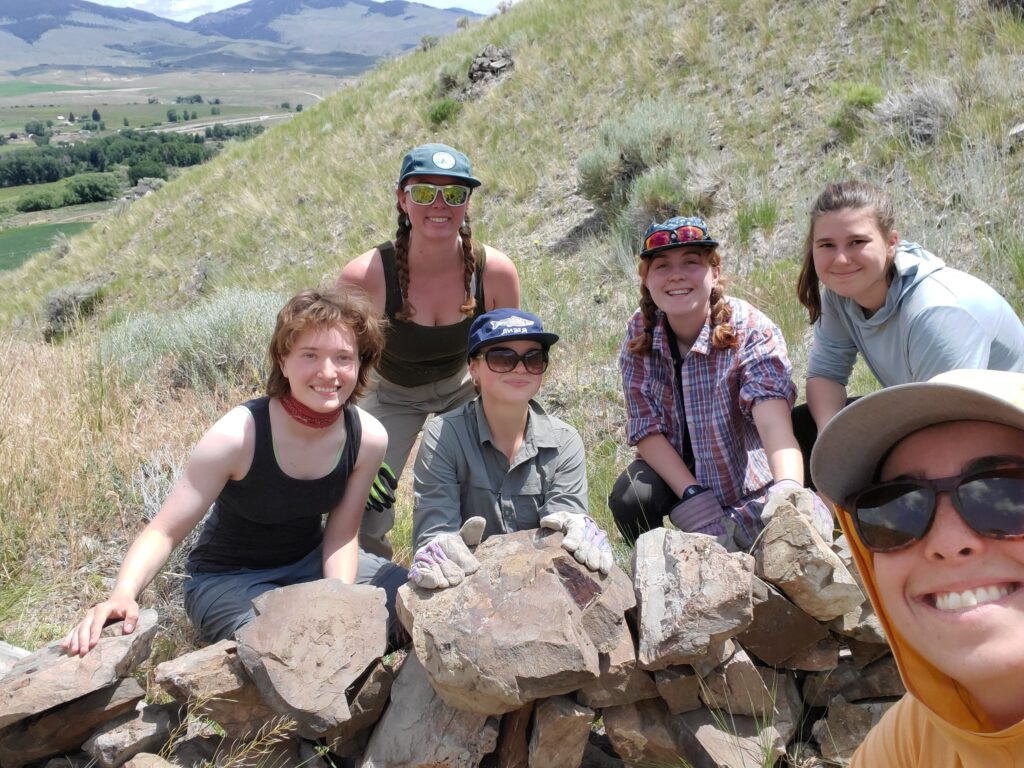
My classmates and I began digging and pulling up rocks of various sizes from the dirt. We took the rocks and stacked them across the hill’s gully, making them about one foot high. We trekked up the hill, making more of these dams every couple feet or so. As we moved up, my motivation went down. I was tired of carrying heavy rocks and throwing them down, fear of rattlesnakes with every boulder I removed from the Earth. It was 12:00, I was ready to trek back down the hill and eat my lunch in the shade. But everyone else in my group had other plans; they wanted to keep moving up to the top of the mountain, finish the project, and build four more dams. I wasn’t about to be the only one to protest the decision, so I obliged and began digging up more rocks.
But then I looked down the hill, my eyes noticing the many dams we had created over the course of the two hours we had been working. A sense of accomplishment flooded over me – my classmates and I had done something truly amazing on this hot Montana summer day, up here in the hills with the sage, Prickly Pear, dozens of grass species, and possibly lurking rattlesnakes.
The meaning of our task also hit me as I saw all our progress come together. We were making these rock dams up in the hills for a reason, to help Erik Kalsta and his ranch. To support the growth of wheat to sustain a healthy sheep population. Suddenly, rock stacking didn’t seem so bad. Hit by this burst of motivation, I yelled to everyone, “For Erik!” And then, “For the sheep!” Sure, I was joking around and trying to get the energy up, but the meaning of these words wasn’t a joke. I was here and hungry in the hot sun, digging up rocks and stacking them up to help improve the ranch. When we decided to build one last dam, I wasn’t annoyed at all. My negative attitude and fear of rattlesnakes had been replaced with immense pride and happiness for the task my friends and I had completed. I walked down that hill past all our dams with a smile on my face.
2 Replies to “Up in the Hills by Susie Plunkett”
Comments are closed.
What a great story. Way to go guys!
Way to go Susie! It is so fun to hear about all of your adventures and I am so happy you have had the opportunity to have so many inspiring, impactful, hands-on learning experiences this year! I keep filling in all the juniors and seniors at Dedham about all of the amazing opportunities they should take advantage of in college just like you are : )